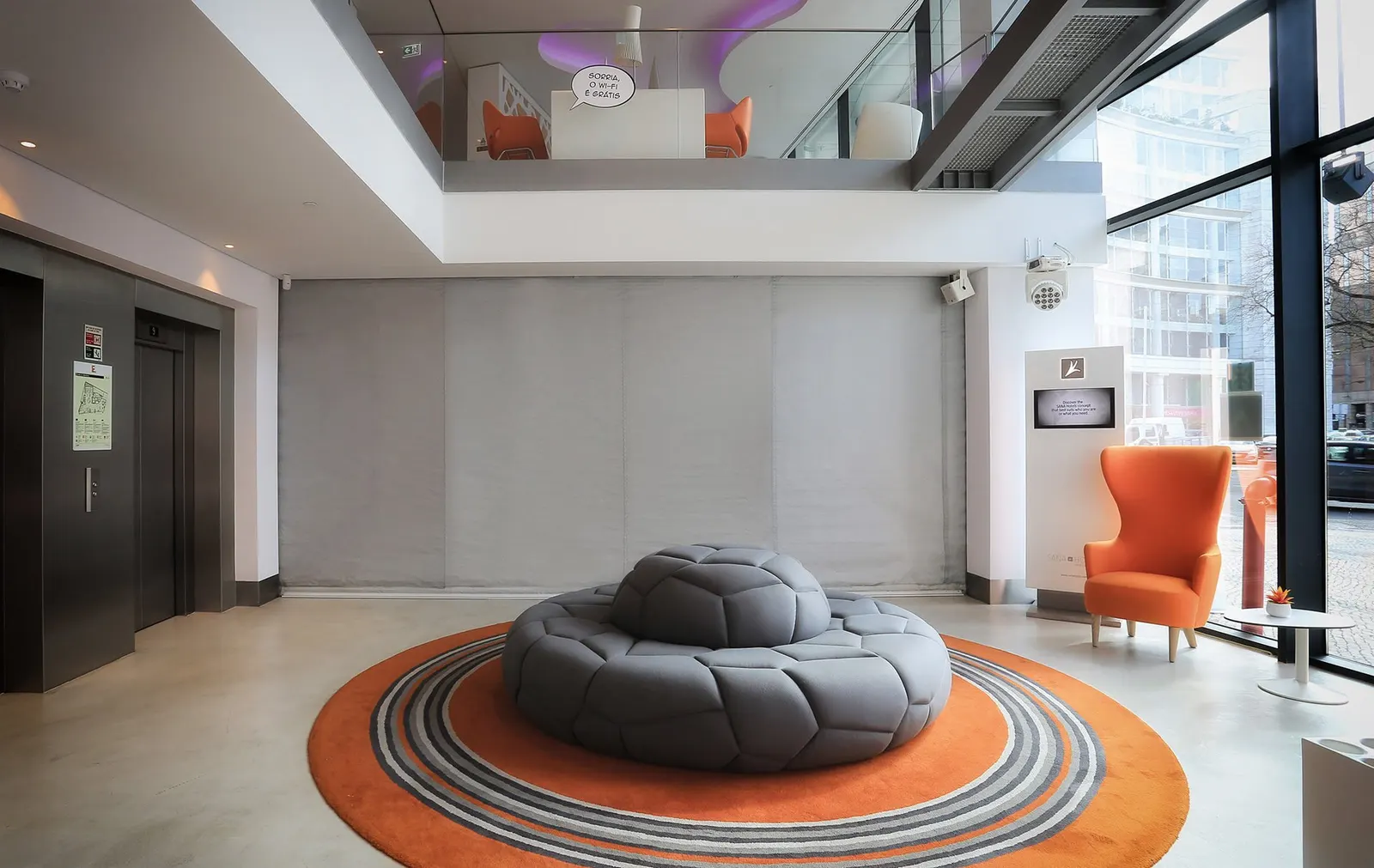
Smoke and fire compartmentation of atriums and voids
An atrium keeps sightlines open, but smoke spreads through it fast. Roller curtains sit hidden in the ceiling and close automatically on alarm.
When does an atrium call for smoke curtains?
Smoke rises and collects at the top of the building. Through an open void, smoke reaches the upper floors and the escape routes located there within minutes. An atrium does not automatically mean additional curtains are mandatory: which provisions are needed follows from the fire safety concept, the compartmentation and the escape routes. Dutch building regulations (Bbl) only allow such open connections if additional measures demonstrably achieve the same level of safety — smoke curtains are a proven solution for this.
How the solution works in practice
The curtains are controlled from the fire alarm system. On detection they descend automatically and in a controlled manner, limiting the smoke volume or restoring the compartmentation. Thanks to the Gravity Fail-Safe principle, the curtain also closes safely under its own weight during a power failure, supported by backup power for up to six hours.
Design and integration into the interior
The cassette is integrated almost invisibly into the ceiling or roof edge; only a slim profile remains in sight. During the design phase we coordinate installation space, colours and connection details with the architect, so the curtain suits the interior without limiting safety.
Want to know more about standards and classifications? Read the fire safety information.